Steps to Buying a Home with an FHA Loan: Complete Guide
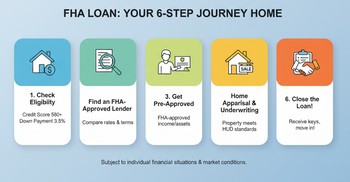 Buying a home is one of the biggest financial moves most of us will ever make. It can feel exciting, scary, and overwhelming all at once, especially if you worry about saving a giant down payment or having perfect credit.
The good news? There's a route to homeownership that's more forgiving than traditional loans. FHA loans have helped millions of everyday people become homeowners, often with less money down and more flexible credit rules. Understanding the FHA home buying process is the first step to success.
This guide walks you through everything from the very first step to closing day. We'll keep it real, break things down, and answer the questions you're probably already asking yourself. Let's jump in.
What Exactly Makes an FHA Loan Different?
FHA stands for the Federal Housing Administration. The government backs these loans, which means lenders feel more comfortable offering better terms to borrowers who might not qualify for conventional financing.
The biggest difference? You'll likely need a much lower credit score and a smaller down payment. While a traditional mortgage might want 10-20% down and a 620 credit score, FHA loans are far more flexible.
One trade-off is mortgage insurance. All FHA loans require an upfront premium (1.75% of the loan amount) and an annual premium that's split into monthly payments. This protects the lender if you default, but it does add to your monthly cost.
Do You Have to Be a First-Time Home Buyer to Get an FHA Loan?
This is one of the most common myths out there. The short answer is: Do you have to be a first-time home buyer to get an FHA loan? No, absolutely not. You can be a repeat buyer and still qualify.
Many people assume FHA loans are only for newbies, but that's not true. As long as you plan to live in the home as your primary residence, you can apply even if you've owned a house before.
There is one catch: you generally can't have two FHA loans at the same time unless you have a specific life event (like a job relocation or a family size increase). But if you've sold your previous home or paid off that FHA loan, you're free to use another one.
Key Requirements: What You Need to Qualify
Before you start shopping, let's talk about what lenders actually look at. Knowing this in advance saves you from heartache later.
- Credit score: A 580 or higher gets you the lowest down payment of 3.5%. Scores between 500 and 579 require a 10% down payment. Many lenders prefer a score of at least 580, so check your credit early.
- Debt-to-income ratio: Lenders typically want your monthly debts (car, student loans, credit cards) to stay under 43% of your gross monthly income. Some flexibility exists if you have strong savings or a long job history.
- Steady employment: Expect to show two years of consistent work, ideally in the same field. Self-employed? Bring your tax returns and profit-and-loss statements.
The property itself matters too. It must be your primary residence (no vacation homes or flips). And it has to pass an FHA appraisal, which checks for safety and structural soundness. Fixer-uppers with major issues won't qualify unless you use a special renovation loan like the FHA 203(k) Standard Loan.
What Are FHA Guidelines for Buying a Home?
Understanding the FHA guidelines for buying a home can feel like learning a new language, but it's really about common-sense standards. The home must be safe, secure, and livable.
An FHA appraiser will look for things like working heat, safe electrical systems, a sound roof, and no chipping lead paint. They also verify that the home's value equals the purchase price. If the appraisal comes in low, you, the seller, or both will need to make up the difference.
Another key guideline: you must move in within 60 days of closing. No renting it out right away. These rules protect both you and the lender by making sure the home is a genuine, stable place to live.
The Process of Buying a House with an FHA Loan (Step by Step)
The process of buying a house with an FHA loan isn't as scary as it sounds. Think of it as a checklist. Knock off one item at a time, and you'll get to the finish line.
Step 1: Check your financial condition
Pull your credit reports from the three major bureaus. Dispute any errors. Calculate your debt-to-income ratio. Start saving for that down payment and closing costs (which usually run 2-5% of the loan amount).
Step 2: Get pre-approved by an FHA lender
Not every bank offers FHA loans, so find one that does. Pre-approval tells you exactly how much home you can afford and shows sellers you're serious. You'll need tax returns, pay stubs, bank statements, and ID. Learn more about FHA loan prequalification.
Step 3: House hunt within your budget
Work with a real estate agent who knows FHA loans. Remember, fixer-uppers with structural problems might not pass the FHA appraisal. Cosmetic issues (ugly paint, old carpet) are usually fine.
Step 4: Make an offer and sign a purchase agreement
Your agent will help you write an offer. Include a financing contingency so you can back out if the loan falls through. You'll also put down earnest money (1-3% of the price) to show good faith.
Step 5: Complete the FHA appraisal and a separate home inspection
The lender orders the FHA appraisal to check value and safety. But pay for your own home inspection too - it's much more thorough. If the appraisal comes in low, negotiate with the seller or walk away.
Step 6: Lock your interest rate and review loan estimates
Within three days of applying, you'll get a Loan Estimate. It shows your rate, monthly payment, and closing costs. Lock your rate if you're nervous about rates rising. Compare offers from multiple lenders.
Step 7: Final underwriting and document submission
The underwriter will ask for more documents - recent pay stubs, bank statements, or letters explaining large deposits. Don't open new credit cards or make big purchases right now. Stay steady.
Step 8: Last walkthrough and closing day
Do a last walkthrough to make sure the home is in the same condition and repairs were done. Review your Closing Disclosure three days before signing. Bring a cashier's check or wire the funds. Then sign the papers and get your keys!
Can I Buy a New Construction Home with an FHA Loan?
Yes, without a doubt. You can use an FHA loan to purchase a brand-new house. Many people believe that FHA loans are exclusively for older properties. In actuality, new buildings are quite acceptable.
One significant hitch is that the builder might require FHA approval. Smaller custom builders may not be, but the majority of large production builders are. Ask directly. Additionally, you'll require patience throughout building and a longer rate lock if you're purchasing an unbuilt home.
The fact that newly built homes readily satisfy the FHA's property requirements gives them an advantage. Lead paint, leaking roofs, and outdated wiring are all absent. Just confirm that the builder is open to using FHA financing. While many are willing to accept FHA loans, some prefer traditional buyers.
How to Buy a House with an FHA Loan: The Smart Moves
Learning how to buy a house with an FHA loan isn't simply about following steps - it's about making wise choices along the way. Here are insider tips to make the procedure smoother.
- Improve your credit before applying: Even a 20-point bump can get you a better rate. Pay down credit cards and steer clear of new debt.
- Save more than the minimum: Putting 5% or 10% down lowers your loan amount and monthly mortgage insurance. Every little bit assists.
- Budget for ongoing costs: Property taxes, insurance, maintenance (save 1-3% of home value per year). Don't be house-poor.
- Make extra principal payments when you can: Even $50 extra a month shaves years off your loan and saves thousands in interest.
Remember, an FHA loan is often a starting point. Many homeowners refinance to a conventional loan once they have 20% equity and a better credit score. That eliminates the monthly mortgage insurance. So think of your FHA loan as a strong tool to get your foot in the door.
Steps to Buying a Home with an FHA Loan (Quick Recap)
Let's boil down the steps to buying a home with an FHA loan into a simple checklist. You can refer back to this anytime you feel lost.
- 1. Check credit and finances
- 2. Get pre-approved by an FHA lender
- 3. Find a real estate agent who knows FHA
- 4. House hunt within your pre-approved limit
- 5. Make an offer with contingencies
- 6. Complete FHA appraisal and home inspection
- 7. Lock your rate and review the Loan Estimate
- 8. Submit final docs to underwriting
- 9. Do last walkthrough
- 10. Close and get your keys
Each of these steps to buying a home with an FHA loan builds off the last. Skip one, and you might run into trouble. Follow them in order, and you'll likely be fine.
Use our FHA Loan Limit Calculator to see the maximum loan amount in your area. Also, explore FHA Down Payment Calculator to plan your savings effectively.
For more information, check out FHA Loans for First-Time Homebuyers and FHA Loan Eligibility Requirements.
Frequently Asked Questions (Honest Answers)
Can I use gift money for my down payment?
Yes, 100%. A family member can gift you the entire down payment. They'll need to write a gift letter stating the money is a gift, not a loan. This is a huge help for buyers with steady income but limited savings.
How long does the FHA loan process usually take?
Most FHA loans close in 30 to 45 days from application to settlement. Complex situations (self-employment, past credit issues) might take a bit longer. Being organized and responding quickly to lender requests is your best bet for a speedy process.
What happens if the FHA appraisal comes in lower than my offer?
You have three options: ask the seller to lower the price to the appraised value, pay the difference in cash yourself, or walk away if your contract has an appraisal contingency. Most buyers negotiate with the seller first.
Can I buy a duplex or triplex with an FHA loan?
Yes, you can buy a property with up to four units, as long as you live in one of them as your primary residence. The rental income from the other units can even help you qualify for the loan. This is a popular way for first-timers to become real estate investors.
Will I have to pay FHA mortgage insurance forever?
If you put down less than 10%, yes - the monthly mortgage insurance stays for the life of the loan. If you put down 10% or more, it drops off after 11 years. The only way to eliminate it completely is to refinance to a conventional loan once you have enough equity.
Combining It All Together: Your Home Buying Journey Awaits
You don't need perfect credit or a massive bank account to buy a home. FHA loans level the playing field. They've helped generations of families build wealth, stability, and pride through homeownership.
Start small. Check your credit today. Call a couple of FHA-approved lenders tomorrow. Ask them for a pre-approval. You might be surprised at how much home you can actually afford.
The process takes patience, paperwork, and a little bit of grit. But millions have done it before you - and you can too. Each month you pay your mortgage, you're building equity and investing in your own future. That's worth every ounce of effort.
So go ahead. Take that first step. Your front door is waiting.
Connect With Us
Please share – it really helps