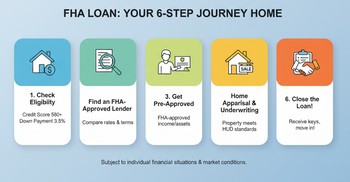
Steps to Buying a Home with FHA Loan
Buying a home represents one of the most significant financial
decisions most people make in their lifetime. For many potential
homebuyers, traditional financing options feel out of reach due to
high down payment requirements or strict lending standards. FHA
loans provide an alternative path to homeownership, opening doors
for millions of Americans each year.
The Federal Housing Administration created these government-backed mortgages to help more people qualify for home financing. FHA loans have helped countless families achieve their dreams of owning property since 1934. These mortgage products offer lower down payment requirements and more flexible credit standards compared to many conventional loan options.
Getting an FHA loan involves several key steps that every potential borrower should understand. The process may seem complex at first, but breaking it down into manageable stages makes the journey clearer. This guide walks you through everything you need to know about securing an FHA home loan, from checking your qualifications to closing day.
What Makes FHA Loans Different from Other Mortgages
FHA loans stand apart from other mortgage options in several essential ways. The government backs these home loan products through the Federal Housing Administration, which reduces risk for lenders. This backing allows financial institutions to offer more favorable terms to borrowers who might not qualify for conventional financing.
One significant difference involves the minimum credit score requirement. Traditional mortgages often require a credit score of 620 or higher, whereas FHA loans can be approved with credit scores as low as 500 in some cases. Borrowers with a credit score of 580 can qualify for the lowest down payment option, which is just 3.5 percent.
The down payment structure sets FHA loans apart from many conventional loan products. Where traditional financing might require a down payment of 10 to 20 percent, FHA home loans accept as little as 3.5 percent for qualified buyers. This lower barrier to entry helps first-time homebuyers and those with limited savings enter the housing market.
FHA mortgage insurance protects lenders in the event that borrowers default on their loans. All FHA loans require two types of mortgage insurance premiums. The upfront mortgage insurance premium equals 1.75 percent of the loan amount, paid at closing. Borrowers also pay an annual mortgage insurance premium, divided into monthly payments throughout the life of the loan.
Key Requirements for FHA Loan Approval
Understanding FHA loan requirements helps you prepare for the application process. These government-backed mortgages have specific standards that all borrowers must meet. Knowing these criteria upfront saves time and prevents surprises during your home search.
Credit requirements for FHA loans offer more flexibility than conventional loan options. A minimum credit score of 580 qualifies you for the 3.5 percent down payment option. Borrowers with lower credit scores, between 500 and 579, can still obtain an FHA loan, but they must make a 10 percent minimum down payment. Some lenders may set higher credit score requirements based on their own policies.
Your debt-to-income ratio plays a key role in FHA loan approval. Lenders want to see that your monthly debts don't exceed specific percentages of your gross income. FHA guidelines typically allow a front-end ratio of 31% and a back-end ratio of 43%. Some borrowers with strong compensating factors may qualify with higher ratios.
Employment history matters when you apply for an FHA loan. Lenders prefer to see at least two years of steady employment in the same field or with the same employer. Self-employed individuals need to provide additional documentation, including tax returns and profit-and-loss statements. Job changes within the same industry usually don't create problems if income remains stable.
Property Requirements and Appraisal Standards
The home you want to buy must meet specific property requirements set by FHA guidelines. These standards protect both you and the lender by ensuring the property is safe and habitable. An FHA appraisal evaluates the condition and value of the home before loan approval.
FHA appraisals look at more than just market value. The appraiser checks for safety hazards, structural problems, and needed repairs. Properties must have adequate heating, safe electrical systems, and sound foundations. Homes with severe defects won't qualify until repairs are completed.
The property must serve as your primary residence. FHA home loans don't allow investment properties or vacation homes. You must move into the house within 60 days of closing and live there for at least one year. A single-family home, townhouse, or approved condominium can all qualify for FHA financing.
Loan limits vary by county and change annually in accordance with median home prices. These limits cap the maximum amount you can borrow with an FHA loan. High-cost areas have higher loan limits than regions with lower housing prices. Check your local loan limit to ensure your target purchase price falls within FHA guidelines.
Step-by-Step Process to Apply for an FHA Loan
Securing an FHA home loan follows a logical sequence. Each step builds on the previous one, moving you closer to homeownership. Understanding this process helps you stay organized and prepared throughout your home-buying journey.
Step One: Check Your Credit and Financial Readiness
Begin by obtaining your credit reports from all three major credit bureaus. Review these reports carefully for errors or outdated information. Dispute any mistakes you find, as correcting them could improve your credit score. A higher credit score may qualify you for better interest rates and terms.
Calculate your debt-to-income ratio before you apply for an FHA loan. Add up all monthly debt payments, including car loans, student loans, credit cards, and other obligations. Divide this total by your gross monthly income. If your ratio exceeds 43 percent, consider paying down debts before applying.
Save for your down payment and closing costs. While FHA loans require as little as 3.5 percent down, you'll also need funds for closing costs, which typically run 2 to 5 percent of the loan amount. Some sellers offer to pay closing costs, but it's best to have these funds available just in case.
Step Two: Get Pre-Approved by an FHA Lender
Finding an FHA lender marks the beginning of your official loan process. Not all financial institutions offer FHA loans, so look for lenders approved by the FHA in your area. Banks, credit unions, and mortgage companies can all provide FHA financing. Compare interest rates and terms from multiple lenders before choosing one.
Pre-approval gives you a clear picture of how much you can afford. Submit a loan application along with documentation of your income, assets, and debts. The lender reviews your financial situation and determines the loan amount you qualify for. This pre-approval letter strengthens your position when making offers on homes.
Gather the necessary documents for the loan application. Lenders typically require two years of tax returns, recent pay stubs, bank statements, and identification. Self-employed borrowers need additional business documentation. Having these papers ready speeds up the application process and prevents delays.
Step Three: Shop for Your Home Within Your Budget
Armed with pre-approval, you can start house hunting with confidence. Work with a real estate agent who understands FHA loans and their requirements. Some sellers prefer buyers with conventional financing, so having an agent who can negotiate effectively helps.
Stay within the loan amount your lender approved. Getting emotionally attached to homes that are above your budget can lead to disappointment. Remember that the purchase price isn't your only cost—factor in property taxes, homeowners' insurance, and FHA mortgage insurance when calculating affordability.
Consider the condition of the properties you view. FHA loans require homes to meet minimum property standards. Fixer-uppers with major structural issues may not qualify for FHA financing. Properties needing only cosmetic updates typically pass FHA appraisals without problems.
Step Four: Make an Offer and Complete the Purchase Contract
When you find the right home, submit a purchase offer through your real estate agent. The offer should include the purchase price, earnest money deposit, and any contingencies. FHA buyers commonly include a financing contingency, which protects you if the loan doesn't go through.
The seller may accept your offer, reject it, or submit a counteroffer. Negotiations may go back and forth several times before a mutually agreed-upon agreement is reached. Once both parties have signed the purchase contract, you can proceed with the formal loan process.
Your earnest money deposit demonstrates to the seller that you're serious about buying. This amount typically ranges from 1% to 3% of the purchase price. The deposit is placed into an escrow account and applied toward your down payment at closing, provided the sale is completed.
Step Five: Complete the FHA Appraisal and Home Inspection
The FHA appraisal is required for all FHA home loans. The lender orders this appraisal to verify the property's value and condition. An FHA-approved appraiser visits the home and examines its overall condition, safety features, and market value. The appraisal protects both you and the lender.
Schedule a separate home inspection even though it's not required. A professional inspector examines the property more thoroughly than an appraiser. They check mechanical systems, the roof, foundation, and other components. This inspection reveals potential problems before you commit to the purchase.
If the appraisal comes in below the purchase price, you have several options. Ask the seller to lower the price to match the appraised value. Make up the difference with additional cash at closing. Or walk away from the deal if your contract includes an appraisal contingency.
Address any repairs required by the FHA appraisal. The appraiser notes any issues that must be fixed before loan approval. Negotiate with the seller regarding who will pay for these repairs. Some sellers agree to complete repairs before closing, while others offer credits at the time of settlement.
Step Six: Lock Your Interest Rate and Review Loan Estimates
Your FHA lender will provide a Loan Estimate within three business days of receiving your application. This document outlines your interest rate, monthly payment, closing costs, and loan terms. Review this estimate carefully and ask questions about anything you don't understand.
Decide whether to lock in your interest rate or let it float. Rate locks guarantee your interest rate for a specific period, usually 30 to 60 days. This protects you if rates rise before closing. Floating your rate means it could go up or down. Most borrowers lock rates to avoid uncertainty.
Compare your Loan Estimate to any other mortgage quotes you received. FHA mortgage rates vary among lenders based on their fees and policies. Even a slight difference in interest rates can result in thousands of dollars saved over the loan term. Don't be afraid to negotiate fees with your lender.
Step Seven: Submit Final Documentation for Underwriting
The underwriting stage involves a detailed review of your finances and the property. Submit any additional documents the underwriter requests promptly. Common requests include recent pay stubs, updated bank statements, or explanations for large deposits.
- Provide written explanations for any unusual financial activity
- Avoid making major purchases or opening new credit accounts
- Maintain steady employment and don't switch jobs if possible
The underwriter may request a verification of employment shortly before closing. Your employer confirms that you are still employed there and that your salary hasn't changed. Job loss or reduced income during underwriting can derail your loan approval.
Clear any conditions the underwriter imposes before final approval. These conditions might include paying off certain debts, providing additional documentation, or making specified deposits. Meeting these requirements quickly keeps your closing on schedule.
Step Eight: Complete Final Walkthrough and Closing
Schedule a final walkthrough of the property shortly before the closing date. This inspection confirms the home's condition hasn't changed since your offer. Verify that any agreed-upon repairs were completed correctly. Check that fixtures and appliances included in the sale are still present.
Review your Closing Disclosure at least three days before settlement. This document finalizes all loan terms and closing costs. Compare it to your Loan Estimate to spot any unexpected changes. Ask your lender to explain significant differences.
Bring a cashier's check or arrange a wire transfer for your down payment and closing costs. Personal checks usually aren't accepted for these large amounts. Your lender provides exact figures the day before closing. Add a small cushion to your payment amount to cover any last-minute adjustments.
Sign the mortgage documents at the closing table. A closing agent or attorney guides you through each form. Read everything carefully before signing. Ask questions about any terms you don't understand. Once all documents are signed and funds are transferred, you will receive the keys to your new home.
Different Types of FHA Loans Available
The FHA loan program includes several loan options beyond the standard purchase mortgage. Each type of FHA loan serves different borrower needs. Understanding these options helps you select the most suitable mortgage product for your specific situation.
The basic FHA purchase loan helps buyers finance a primary residence. This represents the most common type of FHA loan. Qualified buyers can purchase single-family homes, townhouses, or approved condominiums. The standard FHA loan terms include 15-year and 30-year fixed-rate options.
FHA 203(k) loans combine purchase financing with renovation costs. This loan type allows you to purchase a home that requires repairs or updates. The loan amount covers both the purchase price and rehabilitation costs. You make a single monthly mortgage payment instead of separate loans for purchase and improvements.
FHA Refinance Options
An FHA streamline refinance helps current FHA borrowers lower their interest rate or monthly payment. This type of refinance requires minimal documentation and no home appraisal in most cases. You must have made your mortgage payments on time for the past year. FHA streamline refinances can't provide cash out.
FHA cash-out refinance programs allow you to tap home equity. This option works for homeowners with FHA loans or conventional mortgages. You refinance for more than your current loan balance and receive the difference in cash. Use these funds for any purpose, including debt consolidation or home improvements.
Rate and term refinances change your mortgage interest rate, payment, or loan term without requiring equity to be pulled. This type of refinance helps you secure better loan terms as your financial situation improves, such as a higher credit score, since your original loan may qualify you for lower rates.
Specialized FHA Loan Programs
The FHA 203(h) loan helps disaster victims purchase homes. If your home was destroyed in a presidentially declared disaster, this loan type offers 100 percent financing. You are not required to make any down payment. These loans have no minimum credit score requirement; however, please check with individual lenders about their specific standards.
Energy-Efficient Mortgages (EEMs) finance energy-efficient improvements. Add the cost of energy-saving upgrades to your loan amount. Solar panels, new windows, and upgraded insulation can all qualify for tax credits. These improvements may reduce your monthly utility costs enough to offset the higher monthly mortgage payment.
FHA loans for manufactured homes help buyers finance mobile and modular homes. The manufactured home must be built after June 1976 and meet HUD standards. It must sit on a permanent foundation on land you own or will purchase. Not all lenders offer FHA loans for manufactured housing.
Advantages of Choosing FHA Loans
FHA loans offer several benefits that make homeownership more accessible. These advantages help borrowers who might struggle to qualify for conventional loan products. Understanding these benefits enables you to determine if an FHA home loan is a suitable option for your needs.
Lower credit score requirements open doors for many buyers. While conventional loans typically require a credit score of 620 or higher, FHA loans accept credit scores as low as 500. Borrowers with past credit issues, such as bankruptcies or foreclosures, can often qualify sooner with FHA financing than with traditional mortgages.
The low minimum down payment makes saving easier for first-time buyers. Coming up with 20 percent down takes years for most families. The 3.5 percent FHA down payment requirement means you can buy sooner. A $200,000 home requires just $7,000 down instead of $40,000.
Gift funds are allowed for the entire down payment and closing costs. Family members can provide you with financial assistance to help cover these expenses. The donor must provide a gift letter stating that the money doesn't need to be repaid. This flexibility allows buyers who have a stable income but limited savings.
Higher debt-to-income ratios may be acceptable if accompanied by compensating factors. A strong employment history, substantial cash reserves, or minimal consumer debt can help offset a higher ratio. This flexibility allows buyers who might be rejected for conventional financing.
FHA loans allow borrowers with lower credit scores and higher debt ratios than those typically required for most conventional loan products. The flexible underwriting guidelines help more people qualify for loans. Borrowers with non-traditional credit histories may find FHA loans more accessible than other mortgage options.
Assumable mortgages provide future flexibility. If you sell your home, the buyer can take over your FHA loan at the existing interest rate. This feature becomes valuable when interest rates rise. An assumable loan makes your home more attractive to potential buyers.
Potential Drawbacks to Consider
FHA loans aren't perfect for every borrower. These mortgages come with specific costs and restrictions that may not be suitable for all situations. Weighing these limitations against the benefits helps you make an informed decision.
FHA mortgage insurance adds to your monthly costs. The upfront mortgage insurance premium of 1.75 percent gets added to your loan amount. Monthly mortgage insurance premiums continue for the life of the loan in most cases. This insurance protects the lender but increases your monthly mortgage payment.
Conventional loans may eliminate private mortgage insurance once you reach 20 percent equity. FHA loans don't offer this same benefit. Borrowers with FHA loans must refinance to a conventional loan to drop mortgage insurance. This requirement makes FHA loans more expensive over time for some buyers.
Property requirements can limit your home choices. Homes must meet minimum property standards set by FHA guidelines. Properties with particular defects or safety issues won't qualify until repairs are made. Some sellers refuse to deal with FHA buyers due to these stricter requirements.
Loan limits restrict borrowers in high-cost areas. The loan limit caps how much you can borrow with an FHA loan. Buyers in expensive markets may find FHA limits too low for the homes they want. These borrowers might need conventional financing or jumbo loans instead.
Closing costs on FHA loans can be higher than some conventional options. While FHA allows sellers to pay up to 6 percent toward closing costs, not all sellers agree to this. Lender fees, appraisal costs, and title charges all add up. Shop around among different lenders to find competitive interest rates and fees.
You must use the property as your primary residence. Investment properties and second homes don't qualify for FHA home loans. Real estate investors need different financing options. This restriction limits the use of an FHA loan.
Common Questions About FHA Loans
Many borrowers have similar questions when considering FHA financing. Understanding these common concerns helps clarify whether an FHA home loan is a suitable option for your situation.
Can you have more than one FHA loan at a time?
Generally, borrowers are limited to one FHA loan.
Exceptions exist if you're relocating for work, your family has
outgrown your current home, or you have a non-occupying co-borrower
vacating the property. Discuss your specific circumstances with your
FHA lender.
How does bankruptcy affect FHA loan eligibility?
Chapter 7 bankruptcy requires a two-year waiting period
after discharge. Chapter 13 bankruptcy needs just one year of
on-time payments and court approval. These waiting periods are
shorter than the requirements for conventional loans.
What happens if you sell your home before paying off the
FHA loan?
You can sell anytime without penalties. The
FHA loan gets paid off at closing from the sale proceeds. Any
remaining equity after paying the loan and closing costs is yours.
Do FHA loans require down payments to come from your own
funds?
No. Gift funds from family members can cover
your entire down payment. You can also use down payment assistance
programs if you qualify. Some areas offer grants or low-interest
loans to help with down payments.
Can you get an FHA loan with no employment history?
Employment history requirements typically require two years
of experience in the same field. Recent graduates may qualify with
less history if they have education relevant to their new job.
Lenders evaluate each situation individually.
How long does the FHA loan process take?
Most FHA loans close within 30 to 45 days from application to
settlement. Complex situations may take longer. Having your
documents organized and responding quickly to lender requests speeds
up the process.
- Do interest rates differ between FHA loans and conventional mortgages? FHA mortgage rates often compete favorably with traditional rates. Your credit score, down payment, and lender choice all affect your rate. Compare quotes from multiple lenders to find the best deal.
- Can you refinance an FHA loan to a conventional mortgage? Yes. Many borrowers refinance once they have built sufficient equity and improved their credit. Conventional loans may offer lower costs without FHA mortgage insurance. Evaluate whether refinancing saves money based on current rates and your financial situation.
- What credit score do most FHA lenders require? While FHA guidelines allow scores as low as 500, most lenders set their own minimum credit score requirements. Many require a minimum score of 580 for the lowest down payment. Some lenders want 600 or higher. Shop around if your score is on the lower end.
Making the Most of Your FHA Loan
Getting approved for an FHA loan is just the beginning. Making smart decisions throughout the process and after closing helps you build wealth through homeownership. Follow these strategies to maximize the benefits of your FHA home loan.
If possible, improve your credit score before applying. Every point increase may qualify you for better interest rates. Pay down credit card balances, make all payments on time, and avoid opening new accounts. Even a few months of positive credit behavior can make a difference.
Save more than the minimum down payment if you can. While a 3.5 percent down payment opens doors, putting down more reduces your loan amount. A smaller loan means lower monthly payments and less interest paid over the loan term. You also pay less upfront and annual mortgage insurance premiums.
Budget for all homeownership costs beyond the monthly payment. Property taxes, homeowners' insurance, maintenance, and repairs add up. The general rule suggests saving 1 to 3 percent of your home's value annually for upkeep. An emergency fund prevents financial stress when unexpected repairs arise.
Consider buying a home below your maximum loan amount. Lenders may approve you for more than you're comfortable spending. A lower monthly mortgage payment provides financial breathing room. You can put extra money toward savings, retirement, or paying down the mortgage faster.
Make extra principal payments when possible. Any amount above your regular payment reduces the loan balance faster. This strategy saves thousands in interest over time. Even an additional $50 or $100 monthly makes a difference. Check that your loan type allows prepayment without penalties.
Maintain your home to protect your investment. Regular maintenance prevents minor issues from becoming expensive repairs. This care also helps your home maintain its value. Good maintenance records appeal to future buyers when you sell.
Building Equity and Future Planning
Your FHA home loan starts you on the path to building wealth through real estate. Understanding how equity grows and planning for the future helps you make the most of homeownership. Innovative strategies can accelerate your progress toward financial security.
Home equity increases in two ways. Each mortgage payment reduces your loan balance and builds equity. Rising property values in your area also increase equity. Most homeowners build equity through both factors over time.
Track your home's value as the market changes. Online tools provide estimates, but they may not accurately reflect the actual value. Local real estate agents can provide comparative market analyses showing recent sales of similar homes. Understanding your equity helps you make decisions about refinancing or selling.
Plan when to refinance your FHA loan. Once you reach 20 percent equity and improve your credit, consider refinancing to a conventional loan. This move eliminates FHA mortgage insurance, reducing monthly costs. Calculate whether closing costs on the refinance make financial sense.
Consider different loan options when refinancing. Shorter loan terms, such as 15 years, build equity faster and save money on interest. You pay more monthly but own your home sooner. Run the numbers to see what works for your budget and goals.
Use your home equity wisely if you take cash out. Home improvements that increase property value make good investments. Paying off high-interest debt can improve your financial position. Avoid using home equity for depreciating assets or luxury spending.
Think long-term about your housing needs. Will this home work for your family in five or ten years? Planning prevents needing to move sooner than expected. Selling costs money, so staying in your home longer maximizes your investment.
Taking the Next Steps Toward Homeownership
Starting the journey toward homeownership with an FHA loan requires preparation and patience. Each step you take brings you closer to holding the keys to your own home. The process may feel overwhelming at times, but staying organized and informed helps you succeed.
Begin by assessing your current financial situation honestly. Review your credit reports, calculate your debt-to-income ratio, and evaluate your savings. Understanding your current position helps you set realistic goals and timelines. Make improvements where needed before applying.
Research FHA lenders in your area and compare their offerings to find the best fit for your needs. Interest rates and fees vary among lenders, so shopping around can help you save money. Consider online reviews and ask friends or family for their recommendations. Choose a lender who communicates clearly and makes you feel comfortable.
Get pre-approved before house hunting. This step demonstrates to sellers that you're a serious buyer with financing in place. Pre-approval also prevents disappointment by showing you exactly what you can afford. Start your home search with confidence, knowing your budget in mind.
Work with professionals who understand FHA loans. A knowledgeable real estate agent guides you toward properties that meet FHA requirements. They can also negotiate effectively with sellers on your behalf. An experienced loan officer walks you through the application process and keeps things moving smoothly.
Stay patient throughout the process. Buying a home takes time, and obstacles may arise. Delays happen, but staying positive and responsive keeps things progressing. Keep in mind that millions of people have successfully utilized FHA loans to purchase homes.
Celebrate your achievement when you close on your new home. Homeownership represents a significant milestone and builds long-term wealth. Your FHA loan provides the foundation for your financial future. Take pride in your accomplishment and enjoy your new home.
Connect With Us
Please share – it really helps