FHA Seller Concessions: Maximum Limits, Allowable Costs & Negotiation Strategies
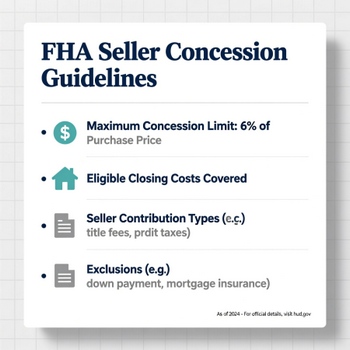 FHA seller concessions allow homebuyers to reduce closing costs by having the seller contribute funds toward eligible expenses. The FHA maximum seller concession limit is 6% of the home's purchase price or appraised value—whichever is lower. This benefit significantly exceeds conventional loan programs and helps qualified borrowers achieve homeownership with lower out-of-pocket cash requirements. Understanding FHA seller concession limits, allowable expenses, and negotiation timing enables buyers to structure deals that reduce their financial burden while remaining compliant with Federal Housing Administration guidelines.
Sellers often use concessions strategically to attract qualified buyers in competitive markets. When structured properly, concessions benefit both parties: buyers reduce their closing costs and down payment burden, while sellers increase property appeal and transaction likelihood. This guide covers the complete framework for maximizing seller concessions under current FHA rules.
What Are FHA Seller Concessions and How Do They Work?
FHA allowable seller concessions represent monetary contributions sellers make toward buyer expenses during the mortgage transaction. These payments cover closing costs, prepaid items, fees, and other legitimate transaction expenses that buyers would otherwise pay from personal funds. The lending industry recognizes concessions as standard transaction components that facilitate home purchases for qualified borrowers.
Concessions operate independently from down payment requirements. A buyer making the minimum 3.5% down payment can still negotiate the full 6% concession allowance. Mortgage lenders verify concession amounts during underwriting to ensure compliance with program guidelines and to prevent fraudulent schemes involving artificially inflated purchase prices.
FHA loans and closing costs work together to determine total cash buyer requirements. By understanding concession limits, buyers can estimate how much seller assistance reduces their out-of-pocket expenses at closing. Use the FHA affordability calculator to model different concession scenarios and down payment combinations.
FHA Seller Concession Limits: The 6% Maximum Rule
The FHA seller credit limit stands at 6% of the lesser amount between purchase price and appraised value. This is the maximum that sellers—or any interested parties combined—can contribute toward buyer expenses under FHA guidelines.
Example: If a home's purchase price is $300,000 but appraises at $290,000, the 6% concession limit is calculated on the lower appraisal value: $290,000 × 6% = $17,400 maximum seller contribution.
FHA interested party contributions include payments from sellers, real estate agents, builders, manufacturers, and any other parties with financial interest in the transaction. All contributions from all interested parties combined cannot exceed the 6% threshold. This rule prevents excessive concessions designed to artificially inflate purchase prices or circumvent lending standards.
Buyers making the minimum 3.5% down payment receive the same 6% concession opportunity as buyers putting down 10% or more. Down payment requirements and concession limits operate independently under FHA rules, giving first-time homebuyers significant flexibility in structuring their transactions.
Qualifying Expenses Covered by FHA Seller Concessions
FHA maximum seller concessions can be applied to numerous legitimate buyer expenses during closing. Understanding which costs qualify helps buyers and sellers negotiate effectively. Typical qualifying expenses include:
- Loan origination fees, underwriting fees, and processing charges
- Discount points (used to buy down the interest rate)
- Title insurance premiums, escrow fees, and settlement charges
- Property appraisal costs, credit report fees, and underwriting costs
- Home inspection fees and professional survey costs
- Prepaid property taxes, homeowners insurance premiums, and mortgage insurance reserves
- Recording fees, transfer taxes, and notary services
- HOA transfer fees and condo certification costs
Non-Qualifying Expenses: FHA seller contributions specifically cannot cover down payment amounts under any circumstance. Cash reserve requirements, personal property purchases (appliances, furniture), utility deposits, and certain third-party fees fall outside allowable concession uses. Distinguishing between qualifying and non-qualifying expenses prevents underwriting delays and loan approval complications.
Interest Rate Buydowns: Strategic Use of Seller Concessions
One of the most powerful uses of seller concessions is purchasing discount points to reduce the buyer's mortgage interest rate. Interest rate buydowns allow sellers to pay lender fees that lower the buyer's rate below the market rate offered without concessions.
Permanent buydowns reduce the interest rate for the entire loan term, providing monthly payment savings throughout the borrower's ownership period. Temporary buydowns reduce payments during initial years (commonly 2/1 or 3/2 structures), then step up to the permanent rate. Use the buydown calculator to model specific payment reduction scenarios and determine how much of the seller's 6% concession allocation a rate buydown requires.
How Appraisals Impact Maximum Seller Concession Amounts
Property appraisals play a critical role in determining the actual dollar amount of max seller concessions FHA transactions allow. The 6% limit applies to whichever is lower: the purchase price or the appraised value. When appraisals come in below the purchase price, maximum concession dollars decrease proportionally, even though the percentage limit remains constant.
Real-World Example: Purchase price $250,000, appraised value $240,000. Maximum concession = 6% × $240,000 = $14,400 (not 6% × $250,000).
Low appraisals create complicated scenarios. Buyers and sellers must either renegotiate the purchase price, increase the buyer's down payment, or reduce the concession amount. Understanding these relationships before making offers prevents last-minute disputes. Current FHA requirements explain loan-to-value calculations and how appraisal values determine financing amounts.
FHA Seller Concessions vs. Conventional and VA Loan Programs
FHA concession limits provide more flexibility than many conventional mortgage programs. Conventional loans typically cap seller concessions at 3% to 9% depending on the down payment amount and property occupancy type. Investment property purchases face stricter limits under conventional guidelines.
USDA loan programs allow seller concessions up to 6%, matching FHA allowances for rural property purchases. VA loans provide the most generous concession rules, permitting sellers to pay all buyer closing costs without percentage caps. These program differences significantly affect which loan option works best for borrowers' financial situations.
Market Dynamics and Seller Concession Negotiation Tactics
Real estate market conditions fundamentally shape seller willingness to offer concessions and buyer ability to negotiate favorable terms. Understanding market cycles enables strategic negotiation planning.
Strong Seller Markets: When inventory is limited and multiple offers drive competition, sellers have leverage to decline concession requests or offer minimal assistance. Buyers competing against each other often waive concession demands to make offers more attractive.
Balanced Markets: Moderate inventory and steady buyer demand create reasonable concession opportunities. Sellers typically agree to reasonable concession requests as long as purchases appear legitimate and appraisals support agreed prices.
Buyer Markets: Abundant housing inventory creates significant FHA IPC limits negotiation leverage. Sellers often agree to maximum concession amounts to attract qualified offers. Properties requiring repairs or updates present additional opportunities for concession negotiation, as buyers request contributions to cover remediation expenses discovered during inspections.
Property condition problems sometimes provide justification for concession requests. When inspections reveal issues, buyers can negotiate seller contributions toward repair costs or closing expense coverage based on inspection findings. Real estate professionals skilled in market analysis help structure these negotiations effectively.
Documentation Requirements for FHA Seller Concessions
Proper documentation ensures FHA allowable seller concessions comply with program guidelines throughout underwriting review. Incomplete or vague concession documentation creates delays and potential approval complications.
Required Documentation:
- Purchase agreement clearly stating concession amounts and intended uses
- Settlement statement showing exact expense allocations at closing
- Detailed breakdown of how seller contributions apply to specific closing costs
- Verification of actual closing expenses from lender and title company
- Appraisal report confirming property value used for concession calculations
Vague concession language in purchase contracts creates underwriting delays and threatens approval. Underwriting processes require detailed verification that all concession documentation meets FHA standards. Real estate agents and closing attorneys ensure proper concession documentation throughout transactions. These professionals understand regulatory requirements and prepare necessary paperwork correctly, preventing last-minute complications that could jeopardize closing dates.
Strategic Planning to Maximize Seller Concession Benefits
Effective concession planning begins during FHA loan prequalification conversations with mortgage lenders. Buyers should discuss potential concession needs based on estimated closing costs and available cash reserves. Professional lenders help buyers understand total purchase costs including down payment, closing costs, and how much concession assistance optimizes their financial position.
Early Planning Benefits: Discussing concession needs during pre-approval enables buyers to structure offers effectively from the initial bid. When making offers, buyers can request specific concession amounts that align with estimated closing costs. Sellers evaluating offers with clearly stated, reasonable concession requests feel more confident proceeding with transactions.
Timing Matters: Last-minute concession requests after offer acceptance create complications that may delay closings or reduce negotiating leverage. Market dynamics change rapidly; what seemed negotiable during offer discussions may feel unreasonable weeks later when financing contingencies near expiration.
Professional guidance from experienced real estate agents and mortgage professionals maximizes concession benefits while maintaining loan eligibility. These experts understand current market conditions and program requirements thoroughly. Getting an FHA loan involves coordinating multiple transaction components, and experienced professionals ensure all pieces align properly.
Common Concession Mistakes to Avoid
Mistake 1: Requesting Concessions Exceeding Actual Costs Buyers sometimes request concessions larger than actual closing costs will require. When excess funds have nowhere to apply, lenders cannot approve the transaction. Accurate cost estimates from lenders prevent this problem. Use the FHA affordability calculator and formal loan estimates to project realistic closing costs.
Mistake 2: Inflating Purchase Prices to Justify Higher Concessions Inflated purchase prices designed to accommodate higher concession amounts raise serious red flags during underwriting review. Appraisers identify these schemes through comparable sales analysis. Avoiding common FHA mistakes improves approval chances significantly.
Mistake 3: Confusing Gift Funds with Seller Concessions Mixing gift funds and seller concessions sometimes creates confusion about down payment sources. Gift fund guidelines differ from concession rules and require separate documentation. Buyers must understand these distinctions to structure transactions properly and avoid documentation errors that delay approvals.
Mistake 4: Failing to Account for Appraisal Impacts Buyers and sellers who don't anticipate appraisal impacts often face complications when values come in lower than expected. Planning concession amounts based on preliminary estimates rather than final appraisal values creates problems. Always request appraisals early to understand maximum available concession dollars.
Recent FHA Changes and Future Concession Trends
FHA periodically reviews concession limits and may adjust guidelines based on housing market conditions and economic factors. Current FHA requirements reflect the most recent program updates. Buyers and sellers should stay informed about potential changes to guidelines.
Interest rate environments influence how buyers use seller concessions strategically. Higher interest rates increase demand for rate buydown concessions while lower rates shift focus toward closing cost coverage. Monitoring interest rates today helps buyers make informed concession decisions about which expense categories to prioritize.
Economic conditions and housing supply levels continue affecting concession negotiation dynamics. Understanding these broader trends enables buyers and sellers to develop effective strategies aligned with current market realities. Professional guidance remains invaluable for successfully navigating evolving market conditions and optimizing transaction outcomes.
Frequently Asked Questions About FHA Seller Concessions
Can seller concessions cover my entire down payment on an FHA loan?
No, seller concessions cannot cover any portion of the required down payment under FHA guidelines. Buyers must provide the minimum 3.5% down payment from their own funds or eligible gift sources. Seller concessions apply only to closing costs and prepaid expenses, not to down payment amounts. This separation protects program integrity and ensures buyers have genuine skin-in-the-game commitment to property ownership.
What happens if seller concessions exceed my actual closing costs?
When seller concessions exceed actual closing costs, the excess amount must either be applied toward principal reduction on the mortgage or returned to the seller at closing. Lenders cannot approve concessions that exceed legitimate buyer expenses regardless of the 6% limit. This rule prevents schemes designed to artificially inflate property values or circumvent lending standards.
Do seller concessions affect my interest rate or loan approval?
Seller concessions themselves do not directly affect interest rates or loan approval decisions. However, buyers can strategically use concessions to purchase discount points that lower interest rates permanently. Lenders evaluate concessions during underwriting to ensure compliance with FHA guidelines and to prevent artificially inflated purchase prices that might not be supported by comparable sales or property condition.
Can I negotiate seller concessions after my offer is accepted?
While possible, negotiating concessions after offer acceptance is significantly more difficult than including them in the initial purchase agreement. Inspection findings or appraisal issues sometimes justify concession requests during the transaction. However, sellers have less incentive to agree once contracts are signed, making early concession discussions far more effective strategically.
Are FHA seller concession limits the same for refinance transactions?
FHA refinance transactions have different rules than purchase loans regarding seller contributions. Rate and term refinances generally prohibit seller concessions entirely since no seller exists in a refinance. Cash-out refinances may allow limited concessions on specific closing costs, but such concessions are much less common than those in purchase transactions and involve complex underwriting considerations.
Connect With Us
Please share – it really helps