FHA Appliance Requirements: What Must Work for Loan Approval?
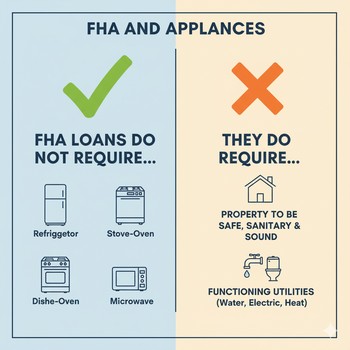 When you're buying a home with an FHA loan, understanding property standards is essential. One common question that trips up borrowers is which appliances the FHA actually requires. Does FHA require a stove? What about a refrigerator or dishwasher? The answer is simpler than you might think, and it could affect your timeline to closing. The Federal Housing Administration (FHA) sets minimum property standards to protect both you and the lender. These standards focus on safety, structural integrity, and basic livability rather than luxury features. Let's break down exactly which appliances matter and which don't.
The Core Answer: Does FHA Require a Stove?
Yes—the FHA requires a working stove or cooking range. This is the only appliance the FHA explicitly mandates in a residential property.
Here's why: The FHA considers cooking ability a basic livability standard. Without a functioning stove or oven, the home is deemed unsuitable for safe food preparation, which falls below minimum habitability requirements.
However, the stove doesn't have to be new or fancy. It simply needs to work. A basic electric range, gas stove, or cooktop attached to an oven all satisfy this requirement. If the property lacks a stove entirely, one must be installed or the property will not receive FHA approval.
If there are exposed utility connections where a stove should be, the appraiser will flag this as a deficiency. The seller will then need to either install a stove or the buyer and seller can negotiate repairs as part of the purchase agreement.
What About Refrigerators, Dishwashers, and Other Appliances?
Unlike the stove requirement, the FHA does not mandate refrigerators, dishwashers, microwaves, dryers, washers, or other kitchen and laundry appliances. These are considered optional.
However—and this is important—if these appliances are present in the home at the time of appraisal and are included in the sale, they must be in working condition. The FHA appraiser will note their condition during the inspection. A broken refrigerator included in the sale may need to be repaired or replaced before closing, depending on the severity of the defect.
Portable appliances like a standalone refrigerator are less likely to be a deal-breaker. Built-in dishwashers or ranges that came with the home have higher expectations for functionality.
FHA Minimum Property Standards: What Gets Checked
The Department of Housing and Urban Development (HUD) publishes Handbook 4000.1, which outlines FHA minimum property standards. During your home's appraisal, the appraiser verifies:
- Structural soundness – Foundation, framing, roof condition
- Safety systems – Electrical wiring, plumbing, heating
- Basic livability – Working utilities, adequate space, sanitary conditions
- Appliance functionality – Any present appliances must work if included in the sale
The FHA appraiser is not looking for granite countertops or stainless steel appliances. They're ensuring the home is safe, structurally sound, and habitable. A stove that turns on and heats up passes the test. A refrigerator that keeps food cold passes the test. But neither needs to be present except for the stove.
FHA Appliance Requirements: A Clear Breakdown
| Appliance | Required? | Must Work if Present? |
| Stove / Cooking Range | Yes | Yes |
| Refrigerator | No | Yes (if included in sale) |
| Dishwasher | No | Yes (if built-in) |
| Oven Hood / Ventilation | No (but recommended) | Yes (if present) |
| Microwave | No | Yes (if included) |
| Dryer / Washer | No | Yes (if present) |
What Happens When Appliances Don't Meet Standards?
If the FHA appraiser identifies a non-functional appliance that's included in the sale, several outcomes are possible:
- Repair Requirement – The seller fixes the appliance before closing
- Replacement – The seller buys a replacement appliance
- Price Adjustment – The buyer and seller negotiate a credit at closing to cover repairs
- Contingency Removal – In some cases, a minor broken appliance won't hold up the deal, but this is at the lender's discretion
Most sellers prefer to replace a broken appliance rather than risk losing the sale. A missing stove, however, is non-negotiable and must be addressed before loan approval.
How Your Lender's Requirements May Differ
While the FHA sets minimum property standards, your individual lender may have stricter requirements. Some lenders require all appliances to be functional regardless of whether the FHA mandates them. Always check with your FHA lender during prequalification about their specific appliance standards.
This is especially important if you're working with a portfolio lender or a bank with its own overlays. They might require a working dishwasher or washer/dryer even though the FHA doesn't.
Red Flags to Catch During Your Home Inspection
Before the FHA appraisal even happens, you should conduct your own home inspection. Look for:
- Stove or range that won't turn on or heat
- Exposed wiring or gas line where a stove should be
- Refrigerator that doesn't cool
- Built-in dishwasher with water damage or mechanical failure
- Missing oven hood or ventilation system
Catching these issues during your inspection gives you time to negotiate with the seller before the FHA appraisal. This prevents appraisal contingencies and keeps your closing timeline on track.
New Construction vs. Existing Homes: Are Standards Different?
The same FHA appliance requirements apply to both new construction and existing homes. Builders of new homes often include appliances as a selling incentive, but they're not required by FHA standards. Always verify in your purchase agreement which appliances are included and confirm their condition before closing.
For new construction, the builder is responsible for ensuring the stove works and any included appliances are functional at the time of final walkthrough.
How to Prepare for Your FHA Appraisal
To ensure a smooth appraisal process regarding appliances:
- Document present appliances – Make a list of what's included in the sale
- Test everything – Confirm the stove, refrigerator, and other appliances work during your walkthrough
- Photograph condition – Take photos if items are in poor condition for appraisal documentation
- Clarify the purchase agreement – Specify which appliances stay with the property and their expected condition
- Ask your lender – Confirm your lender has no additional appliance requirements beyond FHA standards
For more insight into what to expect during your appraisal, check out our guide to FHA loan inspection requirements.
Understanding FHA Handbook 4000.1 on Appliances
HUD Handbook 4000.1 is the official guide for FHA loan requirements and property standards. According to this handbook:
- A functioning cooking appliance (stove) is required for basic livability
- Kitchen appliances like dishwashers are optional and not mandated
- Any appliance present during appraisal and included in the sale must be in working order
- The appraiser documents all appliances and their condition in the appraisal report
- Deficiencies in required items (like the stove) must be corrected before loan approval
This handbook is binding for all FHA appraisers and lenders, so understanding these standards helps you know exactly what to expect.
Related Tools to Help With Your FHA Home Purchase
As you prepare to buy with an FHA loan, you may want to calculate what you can afford. Check out our FHA down payment calculator to see how appliance costs might factor into your total budget. You might also benefit from understanding your debt-to-income ratio if you need to negotiate repair costs with the seller.
Bottom Line: FHA Appliance Requirements
The FHA's approach to appliances is straightforward: the stove must work, but most other appliances are optional. If you're buying a home with an FHA loan, focus your inspection on ensuring the stove is functional and any included appliances are in good working order. This prevents surprises during appraisal and keeps your closing on schedule.
Working with an experienced FHA lender and a thorough home inspector gives you the best chance of identifying appliance issues before they become deal-breakers.
Frequently Asked Questions
Does FHA require a stove if the home never had one?
Yes. The FHA requires a working stove or cooking range for the home to meet minimum property standards. Without one, the property would be considered lacking basic cooking facilities, and the loan would likely not be approved. If a home has never had a stove, one must be installed before FHA loan approval can be finalized.
Does FHA require a refrigerator?
No. The FHA does not require a refrigerator for any property type, including single-family homes, condos, or rentals. However, if a refrigerator is present and included in the sale or lease agreement, it must be functional. A broken or missing refrigerator will not prevent loan approval, but a broken one that's part of the sale may need repair before closing.
Does FHA require a dishwasher?
No. The FHA does not require a dishwasher. Kitchen appliances like dishwashers are optional unless they're built-in and come with the property. If a built-in dishwasher is included in the sale, the appraiser will expect it to work properly. A missing or broken portable dishwasher won't affect your FHA loan approval.
Can I waive appliance repairs to close the loan faster?
Not if the appliances are required under FHA standards. You cannot waive repairs for a missing or broken stove—it must be corrected before closing. For optional appliances like a dishwasher or refrigerator, you may be able to negotiate with the seller about repairs or credits, but the FHA won't force the issue if the appliance is truly optional.
What if the stove works but the refrigerator is broken?
That's usually fine and won't hold up your loan approval. Since the FHA does not require a refrigerator, a broken fridge noted in the appraisal won't be a deal-breaker. The appraiser will document it, but as long as the stove works properly, you should be good to go. Your lender may have additional requirements, so confirm this during underwriting.
Does FHA require a stove and refrigerator in new construction homes?
For new construction, the same rules apply. The FHA requires a working stove for cooking, but does not require a refrigerator. Builders often include appliances as selling incentives, but the FHA doesn't mandate them. Always check your purchase agreement to see which appliances are included, then verify they work during your final walkthrough before closing.
Connect With Us
Please share – it really helps