Benefits of FHA Loans
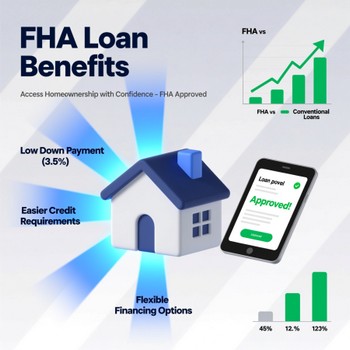 Federal Housing Administration (FHA) loans represent one of the most popular financing options for homebuyers across America. These government-backed mortgages offer unique benefits, such as lower MIP, that make homeownership more accessible to borrowers who might not qualify for conventional mortgage products. Understanding the advantages of FHA loans can help you make an informed decision about your home purchase and weigh the cons of FHA loans.
FHA loans offer flexibility and leniency that conventional loans often cannot match, making it easier to get an FHA loan. The Federal Housing Administration works with approved lenders to offer mortgage options designed for first-time buyers and those with less-than-perfect credit histories. These loan types have helped millions of Americans achieve their homeownership dreams.
When exploring mortgage options, FHA financing stands out for its lower barriers to entry. The program allows borrowers to qualify with credit scores as low as 580 for maximum financing, and even lower scores may work with larger down payments. This flexibility makes FHA mortgages an attractive option for many potential homeowners.
Benefits of FHA Mortgage Programs
FHA loan benefits extend far beyond just lower credit score requirements. These mortgages offer several advantages that make them appealing to a wide range of borrowers. The most significant benefits include reduced down payment requirements, flexible debt-to-income ratio standards, and the ability to use gift funds for closing costs.
The low down payment requirement represents one of the most significant advantages of FHA loans. Borrowers can purchase a home with as little as 3.5% down if their credit score meets the minimum requirement of 580. This lower down payment makes homeownership accessible to those who might struggle to save 10% or 20% for a conventional mortgage.
Gift funds provide additional flexibility for FHA borrowers. Family members can give money to help with the down payment and closing costs, making it easier for borrowers to secure financing. Conventional loans typically have stricter rules about gift funds, but FHA mortgages offer more leniency in this area, allowing you to qualify for an FHA loan more easily.
- Lower down payment requirements starting at 3.5%
- Credit scores accepted as low as 580 for maximum financing
- Gift funds allowed from family members for down payment
- Flexible debt-to-income ratio standards up to 57% in some cases
- No prepayment penalties for early loan payoff
Credit Score Requirements and DTI Flexibility
FHA credit requirements offer hope to borrowers who might not qualify for conventional financing, making it a favorable option for many seeking home equity. While traditional mortgages typically require credit scores of 620 or higher, FHA loans work with scores as low as 580. Some lenders may even consider borrowers with scores between 500 and 579, though these situations require a 10% down payment.
The debt-to-income (DTI) ratio flexibility represents another key advantage. FHA guidelines generally allow DTI ratios up to 43%, but many lenders approve borrowers with ratios as high as 57% when compensating factors exist. These factors might include significant cash reserves, stable employment history, or higher credit scores.
This DTI flexibility makes FHA mortgages particularly attractive to borrowers with student loans or other monthly obligations. Conventional loan standards are typically stricter, making it harder for borrowers with higher debt loads to qualify. FHA lenders can work with borrowers to find solutions that fit their financial situation.
Understanding FHA Mortgage Insurance Requirements
FHA mortgage insurance protects lenders against losses if borrowers default on their loans. All FHA mortgages require two types of insurance: an upfront mortgage insurance premium (UFMIP) and annual mortgage insurance premiums. The upfront premium equals 1.75% of the loan amount and can be financed into the mortgage, which is an essential consideration for any home loan.
Annual mortgage insurance premiums (MIP) vary based on the loan amount, loan-to-value ratio, and loan term, which is an important factor for those looking to buy a home with a mortgage loan. Most borrowers pay between 0.45% and 1.05% of their loan amount annually. This insurance makes FHA loans possible by reducing lender risk, but it does add to the monthly payment costs.
Unlike conventional loan mortgage insurance, FHA insurance cannot be removed when you reach 20% equity. For loans with down payments of 10% or more, the insurance can be removed after 11 years. For loans with smaller down payments, the insurance remains in effect for the life of the loan, unless you refinance.
FHA vs Conventional Mortgage Comparison
Comparing FHA vs conventional mortgage options helps borrowers understand which loan type fits their needs. Conventional loans typically offer better rates for borrowers with excellent credit and significant down payments. However, FHA mortgages provide more flexibility for those with limited funds or credit challenges, which is one of the benefits of an FHA loan.
Interest rates on FHA loans are often competitive with those on conventional mortgages. The government backing allows lenders to offer attractive rates even to borrowers with lower credit scores. However, the required mortgage insurance can increase the total monthly payment to a level higher than some conventional options.
Property requirements differ between FHA and conventional loans, which can impact your choice of loan options. FHA properties must meet specific safety and livability standards determined by an FHA appraiser. The appraiser evaluates the property's condition and determines if any repairs are needed before closing. Conventional loans typically have less stringent property standards.
- FHA allows 3.5% down vs 3-20% for conventional loans
- FHA works with 580 credit scores vs 620+ for conventional
- FHA requires mortgage insurance for the life of the loan in most cases
- Conventional loans may offer better rates for high-credit borrowers, but FHA loans require lower down payments.
- FHA has stricter property condition requirements
Loan Limits and Property Types
FHA loan limits vary by area and are set annually by the Federal Housing Administration. These limits reflect local housing costs and ensure the program serves its intended market. In high-cost areas, FHA loan limits can exceed $700,000, while lower-cost areas may have limits of around $400,000.
The types of properties eligible for FHA financing include single-family homes, condominiums, and multi-unit properties up to four units. Borrowers can even use FHA loans to purchase a duplex and live in one unit while renting the other. This flexibility makes FHA mortgages attractive to investors who want to live in their investment property.
Manufactured homes and some mobile homes also qualify for FHA financing when they meet specific requirements. The property must be permanently attached to a foundation and classified as real estate. This expands homeownership options for borrowers considering alternative housing types.
FHA Loan Types and Refinance Options
FHA offers several loan types beyond the standard purchase mortgage. The FHA 203(k) rehabilitation loan allows borrowers to finance both the purchase price and renovation costs in a single insured mortgage. This option helps buyers purchase homes that need improvements without securing separate construction financing, making it a viable home loan option.
Adjustable-rate mortgage (ARM) options provide alternatives to fixed-rate FHA loans. These mortgages begin with lower initial rates that adjust periodically in response to market conditions. ARM products can be suitable for borrowers who plan to refinance or relocate within a few years.
FHA streamline refinance programs offer existing FHA borrowers simplified refinancing options. The streamlined process reduces documentation requirements and may eliminate the need for a new appraisal. This makes it easier for borrowers to take advantage of lower interest rates or switch from adjustable to fixed-rate mortgages, enhancing the benefits of an FHA loan.
Qualifying Process and Application Steps
The FHA qualifying process begins with finding an approved lender who offers FHA mortgages. Not all lenders participate in FHA programs, so borrowers should verify lender approval before applying. Many banks, credit unions, and mortgage companies offer FHA financing options that can help you buy a home.
Getting preapproved for an FHA loan helps borrowers understand their purchasing power and shows sellers they are serious buyers. The preapproval process involves submitting financial documentation, including income verification, credit reports, and asset statements. Lenders review this information to determine the loan amount and terms.
Required documentation for FHA loans includes two years of tax returns, recent pay stubs, bank statements, and proof of any other income sources. Self-employed borrowers may need additional documentation to verify their income stability. The application process typically takes 30-45 days from application to closing, so working closely with a loan officer can streamline the experience.
- Find an FHA-approved lender in your area
- Gather required financial documentation
- Apply and await underwriting review
- Complete property appraisal and inspection requirements
- Finalize loan terms and prepare for closing on your fixed-rate loan to ensure a smooth transition into homeownership.
Making the Right Housing Decision
Weighing the pros and cons of FHA financing requires careful consideration of your specific financial situation, especially if you want to buy a home. These mortgages work best for borrowers who need flexibility in credit requirements, down payment amounts, or debt-to-income ratios. First-time homebuyers often find FHA loans particularly beneficial, as they require a lower down payment of just 3.5%.
However, borrowers with excellent credit and substantial down payments might find better terms with conventional financing. The required mortgage insurance on FHA loans can make them more expensive over time compared to traditional mortgages without insurance requirements.
Consider your long-term housing plans when choosing between FHA and conventional financing, as each has its own pros and cons. If you plan to stay in the home for many years, the lifetime mortgage insurance on FHA loans could be costly, highlighting one of the cons of an FHA loan. If you expect to refinance or move within a few years, FHA flexibility might outweigh the insurance costs.
Financial planning should include consideration of all monthly costs, not just the mortgage payment. FHA borrowers pay principal, interest, mortgage insurance, property taxes, and homeowners' insurance. Understanding these total housing costs, including MIP, helps you make a realistic budget for homeownership and evaluate the cons of an FHA loan.
Working with experienced lenders and real estate professionals can help you explore all available options. They can provide personalized guidance based on your credit score, income, assets, and housing goals to help you qualify for an FHA loan. Taking time to learn about different mortgage products enables you to make informed decisions about this significant financial commitment.
Connect With Us
Please share – it really helps